
Ventura's City Directory Shelf
A useful Ventura city directory search begins with an honest catalog question: which institution holds the volume, what city name does it use, and is the book alphabetical, street-based, or both? The research file confirms the State Library's specialized City Directories and Telephone Books databases, Ventura County Library local-history books and microfilm, and the appointment-only Museum Research Library. It does not expose a complete publisher and year list, so a continuous run should not be invented from scattered commercial references.
| Collection or route | Years | Where held | Access |
|---|---|---|---|
| California State Library City Directories database | Exact Ventura run unresolved | State Library specialized database | Search Ventura and each county city; ask staff for shelf details |
| California State Library Telephone Books database | Exact run unresolved | State Library reading-room route | Repeat the search under Ventura and San Buenaventura |
| Ventura County Library local history | Catalog and microfilm years vary | County branches and local-history collection | In-library resources; confirm temporary location |
| Museum Research Library | Directory years not published as a shelf list | 100 E. Main Street, Ventura | Free, appointment-only Wednesday to Friday |
| Telephone and reverse sections | Volume-specific | State Library, County Library, or Museum | Use only when the title page confirms the section |
The unresolved year run is itself a research result. Write to a librarian with the target surname, street, and year range, and request the title page, publisher, abbreviation page, and exact shelf or database route before citing a directory entry.
Where Ventura City Directories Can Be Read
Ventura County Library's Local History page points to cataloged books, microfilm, and news resources. Ancestry Library Edition is available only on computers inside Ventura County Library branches and supplies census and birth, marriage, and death databases. E. P. Foster Library at 651 E. Main Street is the central local branch, but it is closed for renovation from March 23, 2026 through fall 2027. Confirm where local-history material was moved, and use Avenue or Hill Road branches when they carry the needed service.
The Museum of Ventura County Research Library is the deeper local archive. It is free and non-lending, with books, maps, architectural drawings, manuscripts, periodicals, images, journals, oral histories, and ephemera. It receives researchers by appointment Wednesday through Friday, 11 a.m. to 5 p.m., at 100 E. Main Street. The librarian can search across formats when given a name, address, organization, and date range. That cross-collection help often matters more than a bare surname query.
The Ventura County Library local-history page and the Museum Research Library page are the two strongest local access points.
The Museum library and appointment desk are shown in the official Museum research-library source captured for the Ventura city directory.
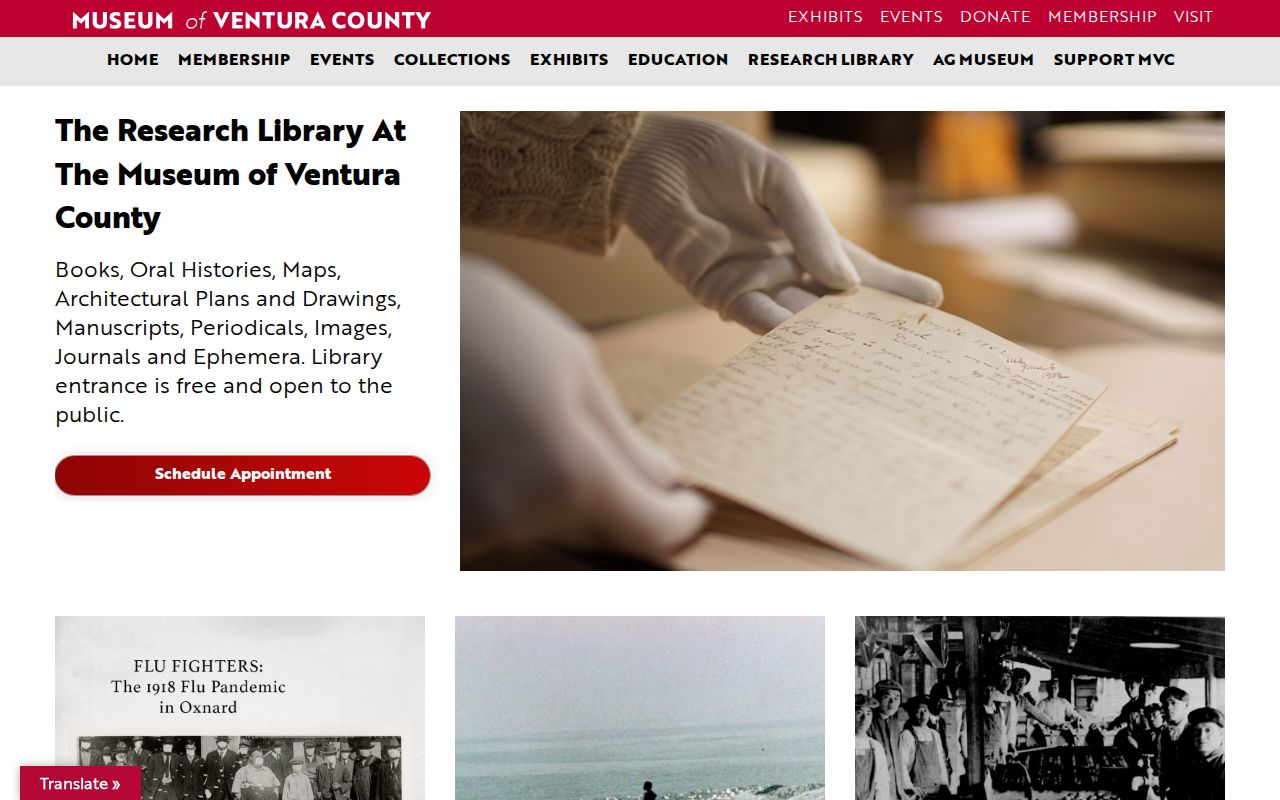
The image represents the local archive route, where a directory question can be paired with maps, clippings, plans, and oral history.
Ventura's Directory Finding Aid
The Museum's Master Biographical Index is one of Ventura's most distinctive historical people resources. Its documentation points to more than 19,000 names and tells a researcher which local holding may contain the useful item. The underlying trail can lead to an obituary, public-record reference, clipping notebook, printed history, newspaper, film, audio item, or digital collection. It is an index to local holdings, not a promise that a full biography sits online.
Search name variants, married names, initials, and approximate birth or death places. The documented fields include source or title, publication or event date, birth and death details, age, and a locator. Ask staff for that locator rather than asking for an unrestricted bundle of personal material. A cataloged item can place a person in a group or address context without proving a current residence.
The Museum Master Biographical Index documentation explains how a Ventura name leads to a local source.
The Museum's digital browse page also shows the range of images and oral histories that can sit beside a Ventura city directory entry.
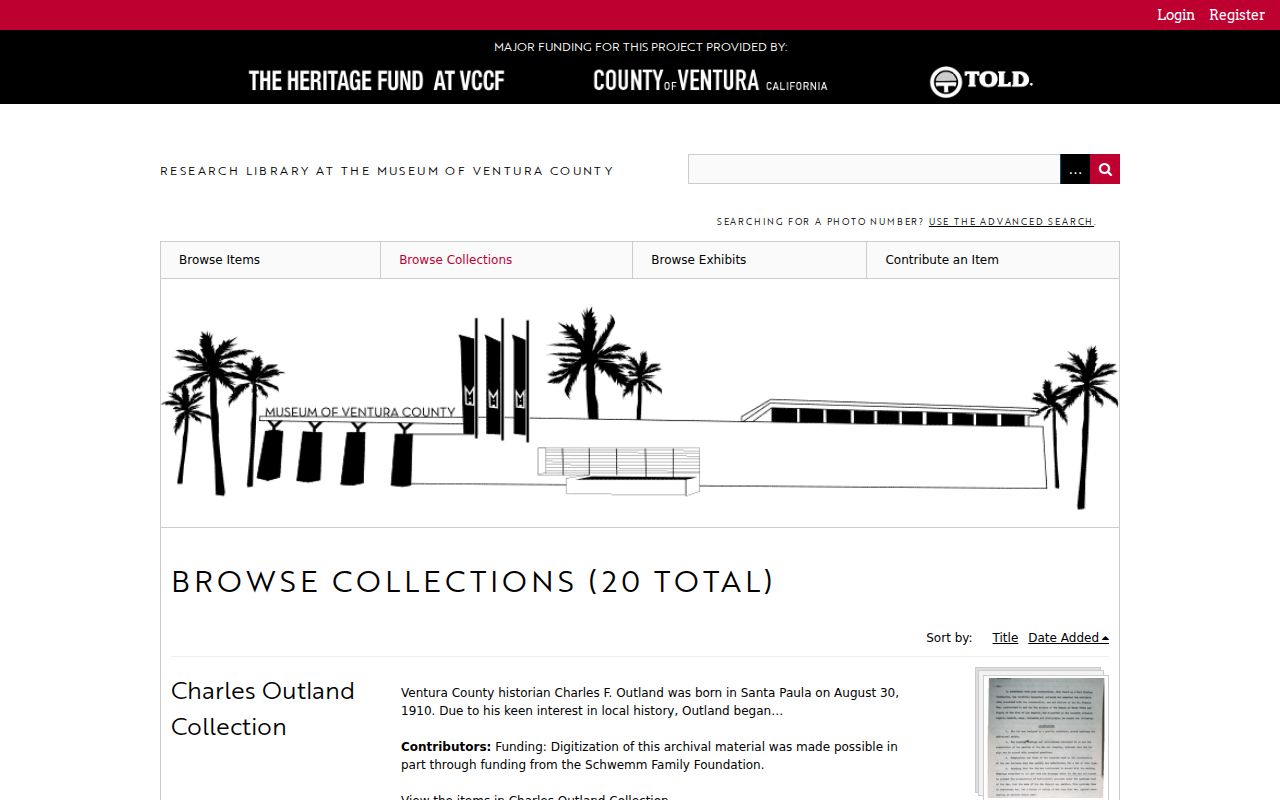
Photographs and oral histories provide context and recognition, while the printed directory remains the source for the exact entry fields a volume chose to publish.
Reading a Ventura City Directory Entry
A Ventura city directory entry should be transcribed before it is interpreted. Start with the surname and given name or initial. Then copy the spouse mark, occupation or employer, residence address, business address, widow notation, and owner or renter mark if that particular volume defines one. Do not expand an abbreviation from a different publisher. Printed conventions change across years.
| Printed clue | Question it can answer | What still needs checking |
|---|---|---|
| Name and initials | Which person the publisher placed in the list | Spelling, married name, and same-name matches |
| Spouse or widow mark | Possible household relationship | Vital, census, or obituary confirmation |
| Occupation or employer | Context for identity and date | Business or license record if the role matters |
| Residence address | Where the publisher placed the person that year | APN, map, street renumbering, and jurisdiction |
| Owner, renter, or householder mark | How that volume classified the entry | The volume's own key and a second year |
- Criss-cross directory
- An address-to-name section, sometimes called a reverse directory, when a volume includes it.
- Householder index
- A list centered on the person treated as the household lead by that publisher.
- Abbreviation key
- The title-page or front-matter guide that defines marks and shortened words for that volume.
- Index versus image
- A finding list points to a page; the page image is the evidence that shows the printed context.
Never treat a directory line as a complete household count. Children, boarders, renters, and people who declined listing may not appear, and a person can be indexed at work rather than at home.
Ventura City Directory Reverse Addresses
Some city directories include a street or criss-cross section, but the Ventura research does not confirm which years do. Look for a section title, address range, and abbreviation key before using it. Copy the full printed address, then move to the alphabetical listing to compare the same person. Search adjoining numbers to see whether a block has a numbering shift or a second dwelling.
The reverse section is an occupancy clue. It does not establish a deed transfer, a tax mailing address, or every person at the house. Pair it with County View, a parcel map, a permit date, or a census schedule. If the old entry uses a street label that now feels wrong, test San Buenaventura and historical map terms before discarding it.
Ventura Directory Companions
Telephone books sit beside a city directory but answer a different question. They may list a subscriber or business number, while a city directory may add occupation, spouse, owner or renter marks, and reverse address sections. The State Library guide specifically directs researchers to search both City Directories and Telephone Books. Ask which publisher created the volume and whether the number is residential, business, or an office listing.
Yearbooks provide another historical identity check. The Ventura College Foundation alumni page has a “Blast from the Past” archive with photographs from 1927, 1939, 1951, 1963, and 1971. A yearbook can confirm a school-era face, spelling, activity, or class connection, but it is not a public address directory. Use voluntary alumni contact routes rather than inferring a current location.
The Ventura College yearbook archive is a useful companion to a Ventura city directory when the goal is family history or reconnection.
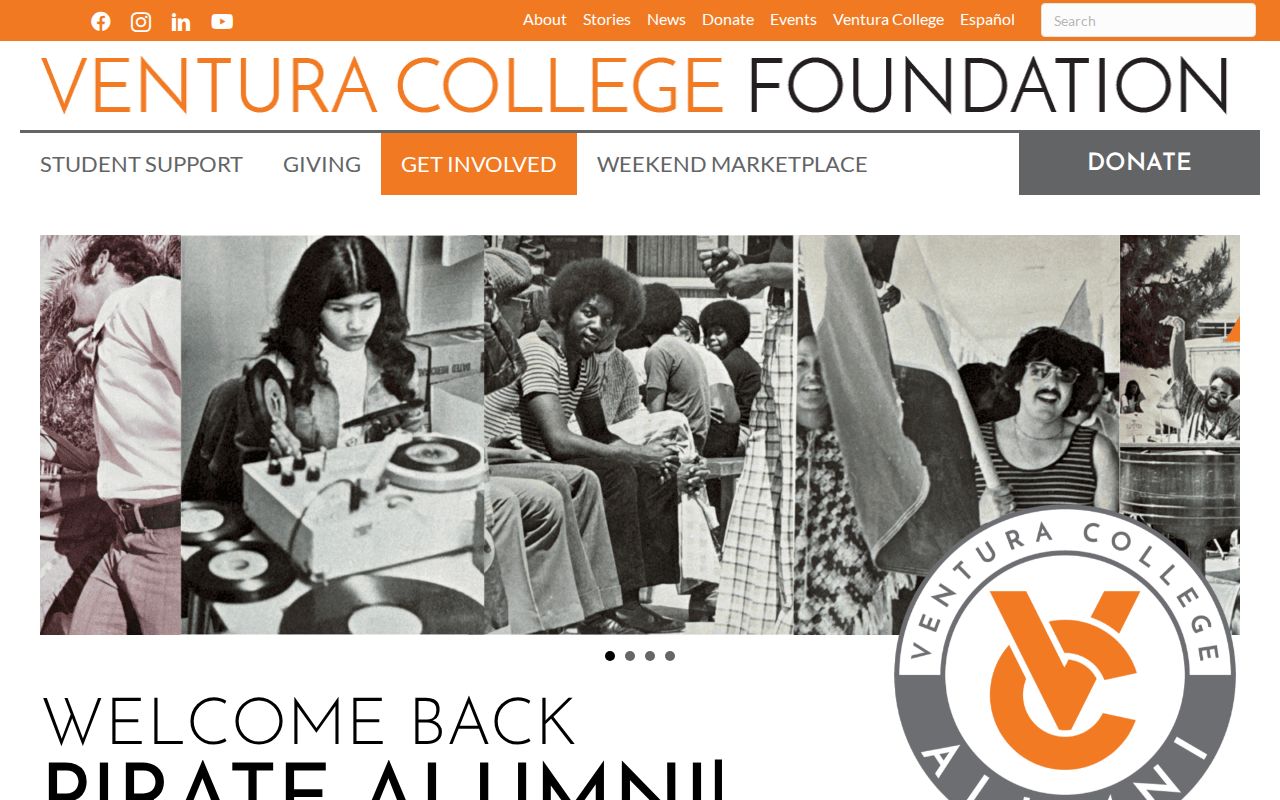
The yearbook image supplies a school-era anchor that can be tested against a directory name without turning alumni material into a household list.
Pair Ventura Directories with Census Years
Trace a household year by year instead of jumping from one decade to the next. Write the exact name and address from each volume. Note a spouse, occupation, householder mark, or “removed to” phrase if the publisher uses one. Then pair the directory years with the federal census schedules that are public through 1950 as of 2026. A directory between census years can narrow an arrival or departure, while a census can add household relationships that a directory omits.
- Choose a printed directory or telephone-book year and photograph or transcribe its title and publisher information.
- Search the alphabetical name section and the street or reverse section when both exist.
- Record address spelling, spouse or occupation marks, and any indication of a move or omission.
- Compare the address with County View, assessor parcel clues, historic maps, or a permit timeline.
- Use the nearest census year, obituary, newspaper, or probate record to test identity and household relationships.
A missing entry can mean a move, death, changed name, publisher omission, temporary absence, or a different address convention. It does not by itself prove that the person left Ventura.
Ventura Maps Explain a Directory Gap
Pierpont is a local case study in address continuity. The neighborhood was subdivided in 1925 with homes facing pedestrian Courts and vehicle access through rear Lanes. In the early 1950s, houses were reoriented toward the Lanes. During late-1960s annexation, fifteen-foot Courts were closed and transferred to adjacent owners. A house can therefore keep the same parcel while its useful street description changes.
When a Ventura city directory stops showing a house, search both Court and Lane terms, compare the tract and APN, and read the record map or historic survey. Sanborn maps can add footprint and use context, while newspapers can supply an address change or family notice. Maps do not identify a resident by themselves, but they can explain why a correct name appears under a surprising address.
The County Library local-history screen points to the books, microfilm, and databases that help test a historical address.
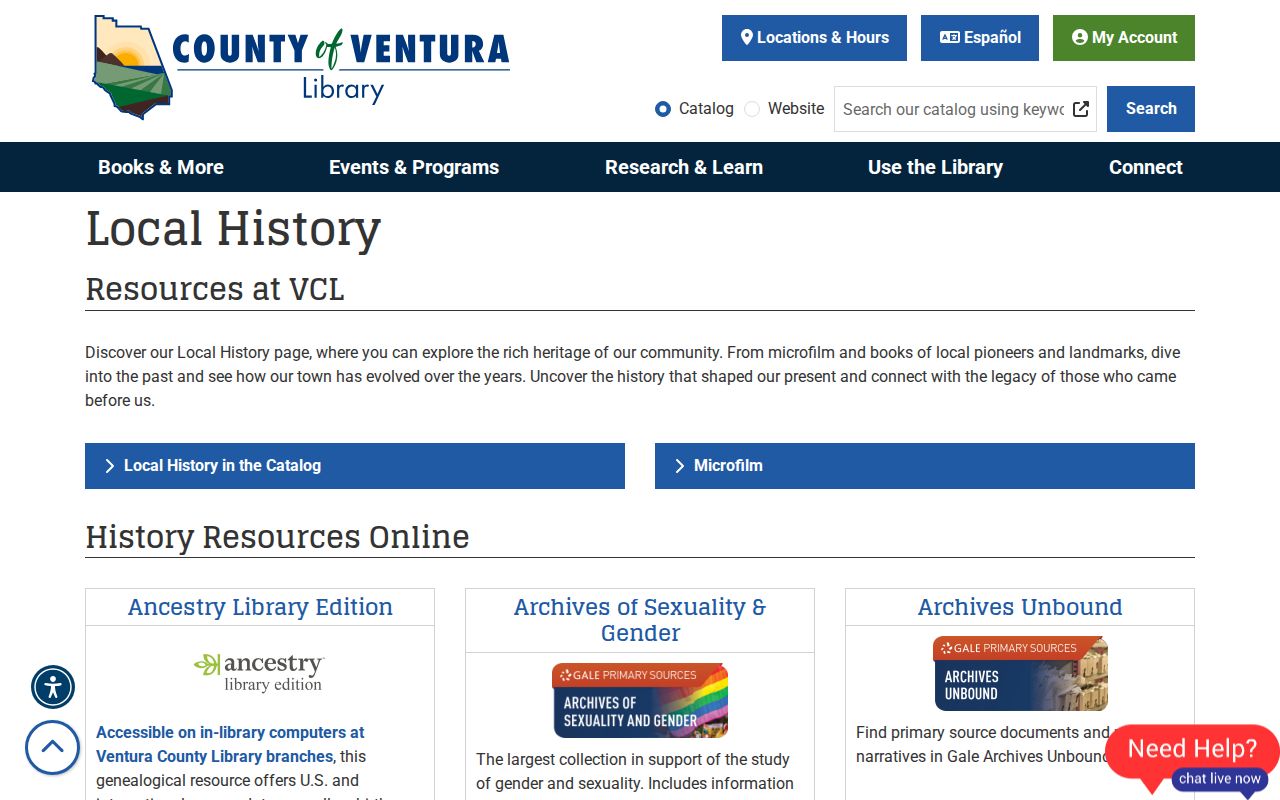
Library access is the bridge between a printed directory, a census year, and the map or newspaper source that explains a gap.
Ventura City Directory Catalog Gaps
The first Ventura city-directory year, publisher chronology, last printed edition, exact reverse-directory years, and local abbreviation key were not verified in the authoritative sources inspected. That is not permission to fill the gap with a guess. Ask the State Library, County Library, or Museum for an exact title-page citation. If a volume is not at one location, request a catalog search under Ventura, San Buenaventura, and the individual county city names.
Ventura's broader record history can guide the search. The city was incorporated in 1866, the county formed in 1873, the first local newspaper began in 1871, and the city expanded through oil, postwar, and annexation eras. Those dates help choose map and newspaper companions, but they do not establish a directory publication date. A careful Ventura city directory citation names the title, publisher, year, institution, page, and access condition.
- 1871: The Ventura Signal began before county formation, creating an early newspaper trail for names and notices.
- 1873: Ventura County separated from southern Santa Barbara County, changing the jurisdiction to test for older records.
- 1925: Pierpont's Court and Lane plan created a local address-continuity problem for later directories and maps.
- 2026: E. P. Foster's renovation closure makes temporary library holding locations part of the current access check.