
Ventura Previous Resident Sources
A Ventura house history needs an era plan. Current parcel data can locate the land, but it does not name every household. Recorded instruments can show owners, while directories, census schedules, newspapers, obituaries, and probate can add occupants or family links. The table keeps the time span and evidence type visible.
| Source | Years it covers | Where held | What it shows |
|---|---|---|---|
| Current parcel GIS | Live in 2026 | County View | APN, situs, parcel geometry, adjacent parcels, record-map clues |
| Recorder grantor-grantee index | Current cutoff unverified; historic media documented 1968-1988 | Ventura County Recorder counter and online route | Party roles, recording dates, document numbers, legal descriptions |
| City permit history | Exact first year unverified | City of Ventura Permit Services | Permits, microfiche permits, private sewer-lateral reports, project roles |
| City directories and telephone books | Exact local run unresolved | State Library, County Library, Museum | Householders, addresses, occupations, reverse entries when present |
| Federal census | Through 1950 as of 2026 | Library and genealogy collections | Household members and relationships on an enumeration date |
| Sanborn and historic maps | Edition-specific; Ventura years unresolved | Library of Congress and local collections | Footprint, use, street names, subdivision context |
| Obituary and probate sources | Event-specific | Libraries, Museum, Ventura Superior Court | Death, relatives, estate roles, and possible address links |
Start with a current parcel for a recent house. Start with a library, map, or newspaper when the clue predates the online systems. A gap in one source is normal and should lead to the next channel.
Ventura Previous Residents Start
Normalize the address in City Find or County View, then choose the correct candidate and record the APN, situs spelling, tract, map, book, page, block, or parcel details. Turn on the city boundary layer. A postal Ventura address may be outside the incorporated city, which changes whether the next permit search belongs to City Permit Services or County Citizen Access.
The parcel is a continuity key, not a person. The county GIS layer shows no owner or household field in its public schema. Assessment characteristics are maintained for assessment purposes and are not continuously updated. Use the lawful Ventura County Assessor channel for current assessment ownership clues, and keep the mailing address separate from the physical situs.
A previous residents search should preserve the present parcel before it reaches into older names. If the address changed, the APN, tract, record map, and legal description can keep the question tied to the same land.
- APN
- The assessor parcel number that bridges map, assessment, and document clues.
- Situs
- The physical land or improvement location, distinct from a tax-mailing address.
- Legal description
- The lot, tract, map, book, page, or parcel language in a recorded instrument.
- Successor APN
- A later parcel key created when land is split, merged, or otherwise reconfigured.
Save the present-day parcel first. The next step is a deed or permit trail, not a guess about who lived there.
Ventura Previous Residents Deed Chain
The grantor-grantee index follows party names, so begin with the current assessment owner through the lawful county channel. Search that name as grantee to find an acquisition deed. Read the deed for grantor, recording date, document number, vesting names, and legal description. Then search the grantor as an earlier grantee and repeat. Bridge the chain with the APN and legal description, not just a street line.
- Confirm the current situs and APN in County View and determine whether the property is city or county jurisdiction.
- Establish the current assessment name through the lawful Assessor route, keeping mailing address and occupancy separate.
- Search that name as grantee in the Ventura Recorder index and record the document number, date, grantor, and legal description.
- Search the prior grantor as grantee for the earlier instrument, testing spelling variants and trust or estate names with care.
- When the online index ends, switch to counter indexes, microfiche, deed books, or recorder access guidance.
- Use directories, census, permits, maps, newspapers, probate, or obituaries to add occupants to the ownership timeline.
A deed proves a transfer of an interest. It does not prove that the grantee moved in, stayed, or was the only person at the address.
The Ventura County Recorder Grantor/Grantee Search is the party-index route used for the chain.
Ventura Previous Residents Web Index
The current Recorder page rejected automated inspection, so its live start date, document-type choices, image access, and current fees were not safely captured. Historical county fee material proves computerized and microfiche grantor-grantee products for 1968 through 1988. It does not prove that today's web search begins in 1968 or that every image is online.
Use the Ventura Government Center counter at 800 S. Victoria Avenue, call 805-654-3665, or email the general recorder address for access guidance. Earlier index volumes and images may require a counter, microfiche, deed-book, mail, or records request route. A careful previous-residents search marks the change in channel rather than turning an online stopping point into a false date.
California's CPRA can request a reasonably described existing record from the actual custodian, but it cannot override a closed court, voter, vital, or protected-address record. Court case files follow court access rules rather than a county-records request.
Ventura Previous Resident Permit Trail
City Permit Services says recorded permit history for an address inside city limits is available through its Public Records Access Portal. The set includes permits, microfiche permits, and private sewer-lateral reports, with free online search and printing. Missing files can move to My Ventura Access or the Room 117 counter. County-jurisdiction parcels use VC Citizen Access instead.
Permit records can name an applicant, contractor, architect, engineer, owner, or project contact. Label the role each time. A construction professional is not a prior occupant. Building Records Disclosure Reports can help date city building and code history in a sale context, but the report describes the city's record history, not everyone who occupied the property.
The Ventura historic-preservation resource adds survey and landmark context to a permit timeline.
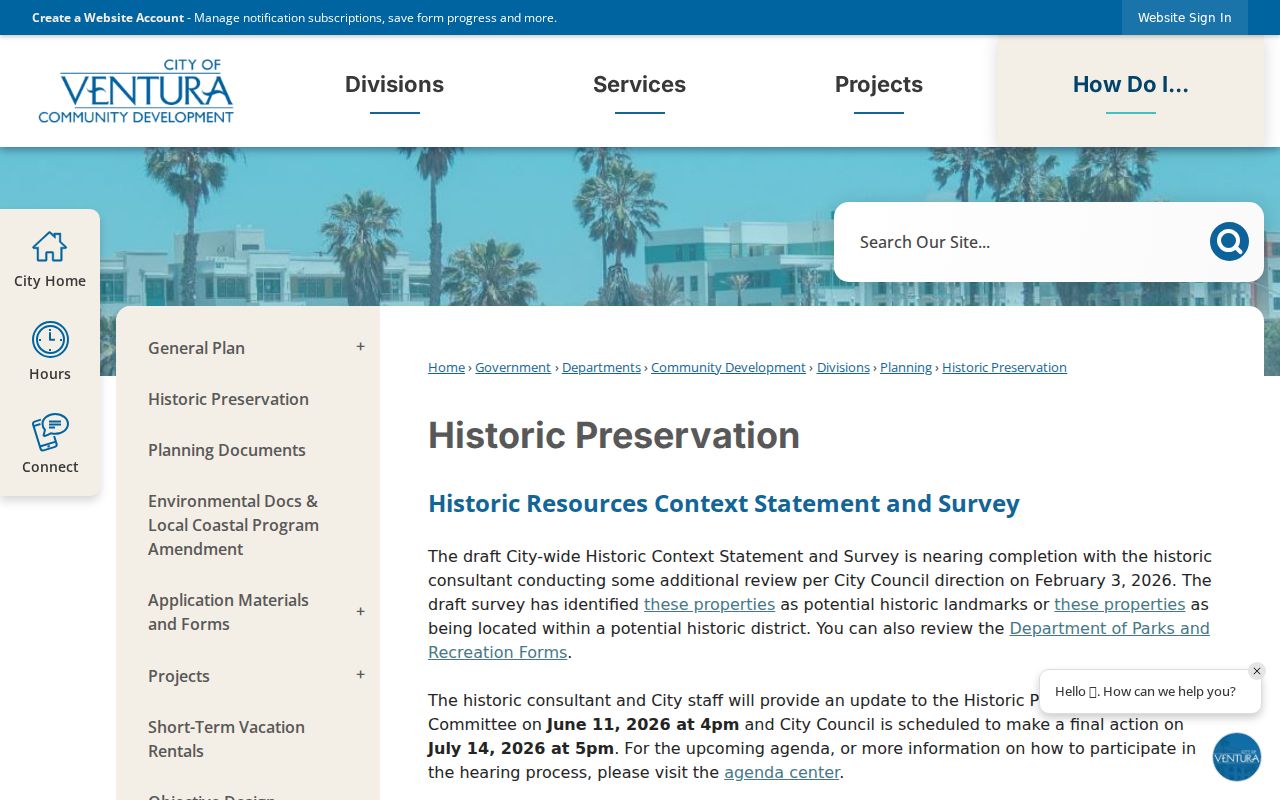
A survey can explain a property's period or context, while the permit and deed records supply the dated transaction or work clue.
Ventura Previous Residents Court Shift
Pierpont offers a Ventura-specific test for a missing address. The 1925 subdivision placed houses toward pedestrian Courts, with cars using rear Lanes. In the early 1950s, houses were reoriented toward the Lanes. During late-1960s annexation, fifteen-foot Courts were closed and transferred to adjacent property owners, and later construction changed the built setting.
For previous residents, search both Court and Lane labels in directories, permits, newspapers, maps, and legal descriptions. Match the APN, tract, building footprint, and time period before concluding that a name vanished. A modern street search can fail even when the parcel and household trail are sound.
Past Households in Ventura Directories
Ownership and occupancy meet in historical directories, census schedules, newspapers, and obituaries. The exact Ventura city-directory run is unresolved, so ask the State Library, County Library, or Museum for a title-page and publisher citation. Search both alphabetical and reverse sections when a volume has them. Record the printed name, address, spouse or occupation mark, and any move notation.
Use a paired sequence: present APN → deed owner → directory or telephone entry → census year → permit or map → obituary/probate endpoint. A census gives household relationships on one date. A directory between census years can narrow arrival or departure. A missing listing can mean omission, a changed name, a temporary absence, or a street-label shift.
That sequence keeps a previous residents claim tied to a source and date instead of a broad name match.
- Choose a directory year and copy its title, publisher, address spelling, and page.
- Search the same name and address in nearby directory years and the matching census schedule.
- Test the address against maps, APNs, permits, and any Court or Lane terminology.
- Use newspapers, death records, probate, or the Museum index to confirm a family link.
The historical collection itself is explained on the Ventura city directory page; the current parcel chain remains the bridge to a present address.
Ventura Previous Residents Archives
The Museum of Ventura County's Research Library holds maps, architectural plans, manuscripts, periodicals, photographs, oral histories, and ephemera. Its Online Archive of California finding aids include the Ventura County Historical Records Commission collection from 1971 to 1981, with agency histories, retention inventories, and schedules. That collection can explain why a record series survives, moved, or has a gap.
Sanborn fire-insurance maps describe footprints, construction, and use. They are not resident lists. The Library of Congress search supports Ventura and the formal San Buenaventura name, but exact local edition years were not verified. Compare a map sheet with the parcel, directory address, and permit timeline rather than using a building outline as proof of a person.
The Online Archive of California Museum finding aids provides the archival route.
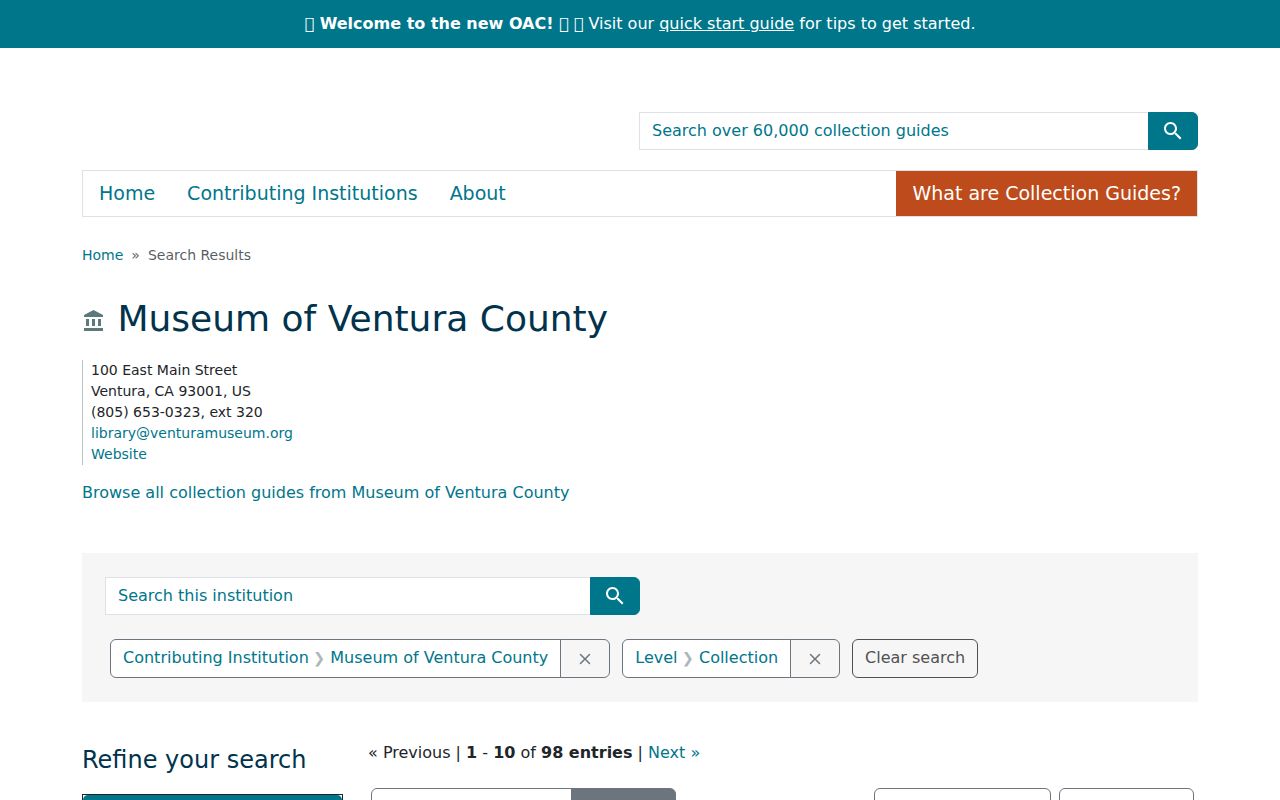
An archival finding aid is a guide to a collection. Ask for the collection number, box or folder, access condition, and exact locator before citing a historical fact.
The Historical Records Commission collection is unusually helpful when an older source seems to have vanished. Its 1971 to 1981 files include agency histories, material inventories, correspondence, and retention schedules. A finding aid may show which office once held a tax, road, health, sheriff, or clerk series, or why a set moved. It does not recreate the missing record, but it can explain a gap in the previous residents trail and point to the next archive or custodian.
Ventura Previous Residents Trail Limits
Obituaries and probate can close one part of a previous-residents timeline, but identity still has to be matched. Compare the decedent's name, age, place, spouse or relatives, address, and date with the directory and deed clues. Probate can show a petition, personal representative, heir role, or order; a named beneficiary should not be called an heir unless the filed instrument or order supports that label.
For events before Ventura County formed in 1873, search the earlier Santa Barbara County jurisdiction. For older office references, date the courthouse: the first county courthouse stood on Santa Clara Street through 1913, the Poli and California courthouse is now City Hall, and current county operations use the Victoria Avenue Government Center. Place and date are as important as name.
Lawful house history. Previous residents research belongs to documented family, property, archive, and estate questions. Do not turn a past address trail into a way to stalk, harass, intimidate, impersonate, or harm anyone.